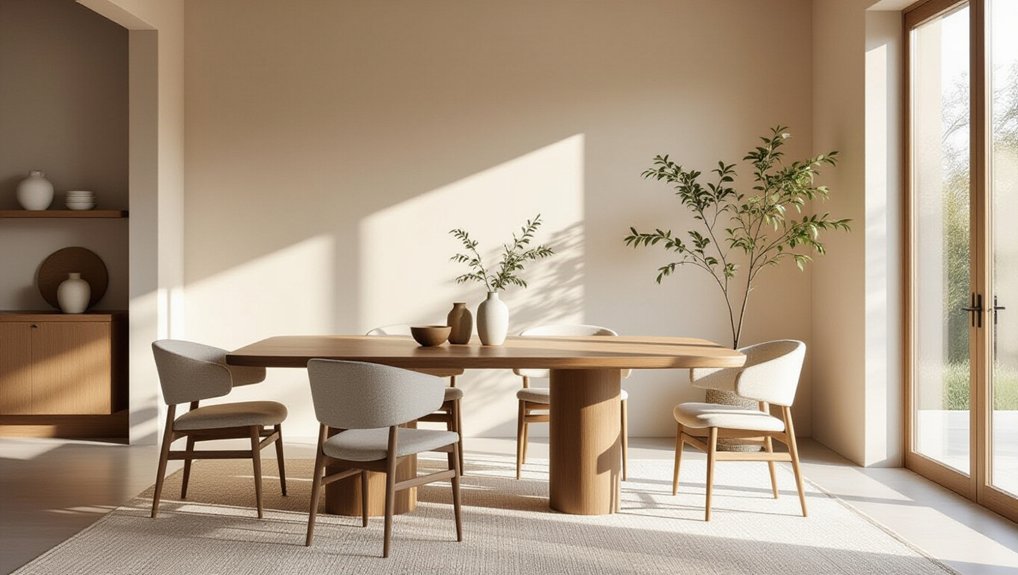
20 Japandi Dining Room Designs for a Fusion of Elegance and Simplicity
When you think about creating a dining space that embodies both elegance and simplicity, Japandi design might be the perfect solution. This aesthetic blends the serene minimalism of Japanese style with the functional warmth of Scandinavian decor. You’ll find that each element in a Japandi dining room serves a purpose while contributing to a calming atmosphere. Curious about how to achieve this balance in your own home? Let’s explore the key features that define these stunning spaces.
The Essence of Japandi Design: What Makes It Unique?
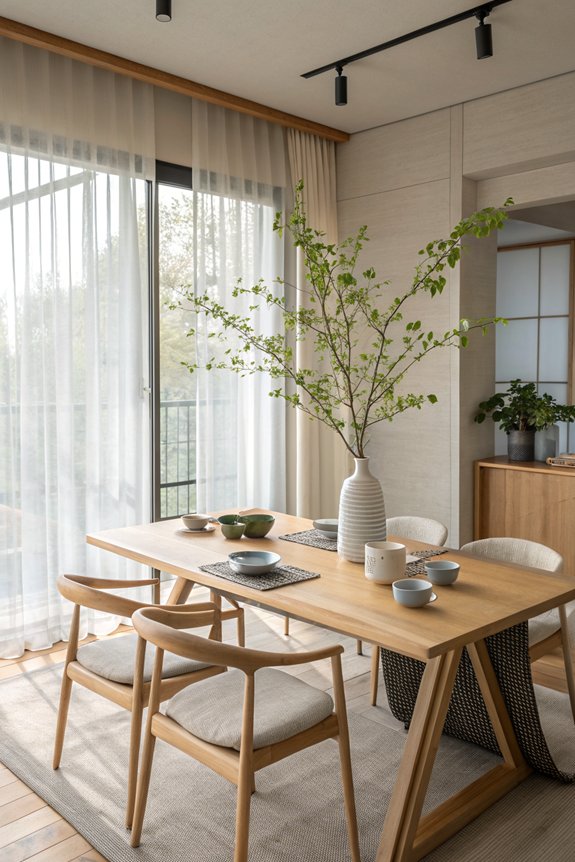
When you immerse yourself in Japandi design, you’ll discover a harmonious blend of Japanese minimalism and Scandinavian functionality that sets it apart. This style emphasizes simplicity, natural materials, and muted colors, creating a serene environment. You’ll appreciate how it fosters mindfulness and promotes a clutter-free space, allowing you to focus on quality over quantity in your surroundings and daily life.
Key Features That Define Japandi Dining Rooms
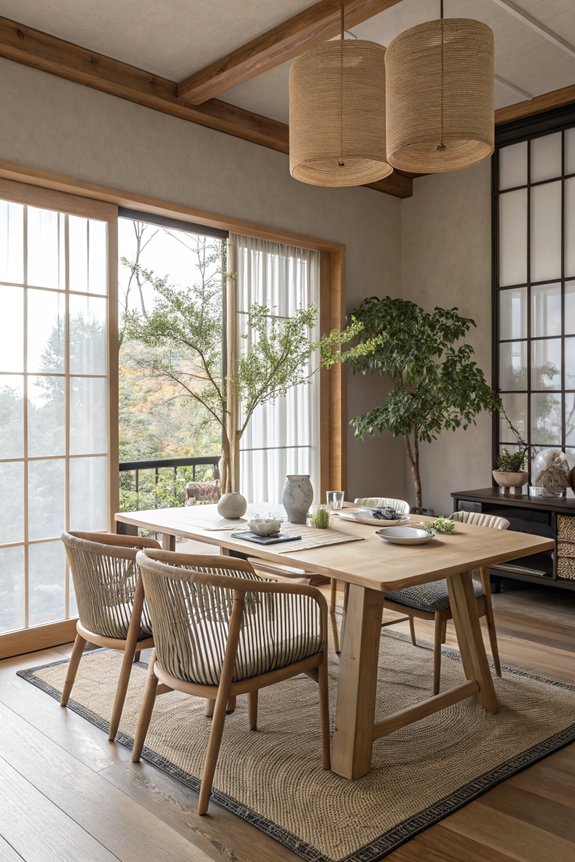
Japandi dining rooms embody the perfect fusion of Japanese aesthetics and Scandinavian practicality, showcasing a few key features that truly define this style. You’ll appreciate the clean lines, minimalistic decor, and natural materials that bring warmth and simplicity to your space.
- Neutral color palettes
- Functional furniture
- Natural light emphasis
- Textural contrasts
Choosing the Right Color Palette for Your Japandi Space
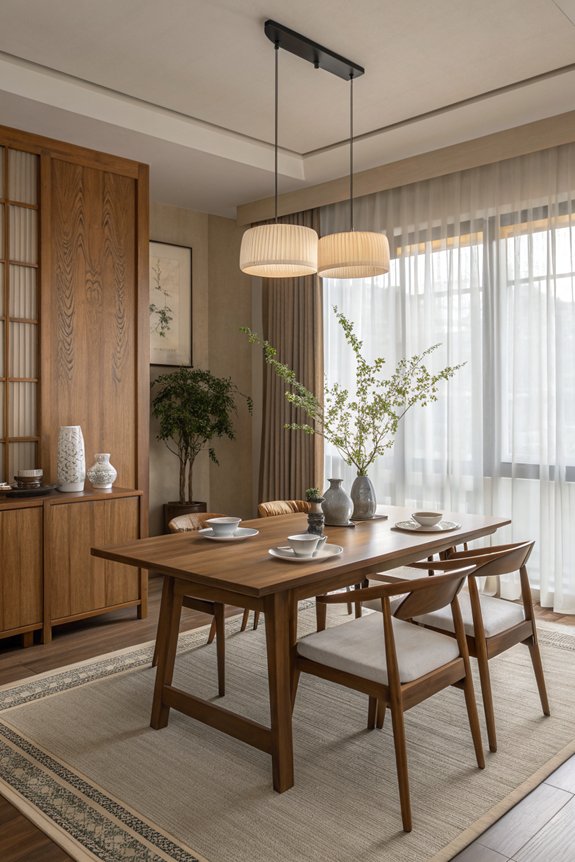
To create a harmonious Japandi dining room, selecting the right color palette is essential, as it sets the tone for the entire space. Opt for a mix of muted tones, such as soft grays, warm beiges, and earthy greens, which promote tranquility. Pair these with deep, rich accents like navy or charcoal to add depth, ensuring a balance between elegance and simplicity.
The Role of Natural Materials in Japandi Design
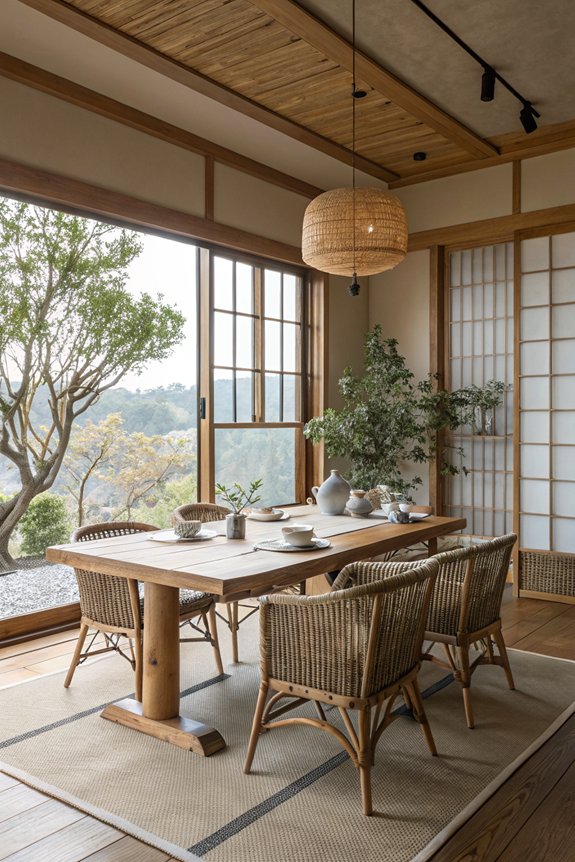
Natural materials play a pivotal role in defining Japandi design, seamlessly blending the warmth of Japanese aesthetics with the simplicity of Scandinavian style. Incorporating these elements creates a serene atmosphere in your dining room. Consider using:
- Bamboo for furniture
- Linen for table settings
- Oak for flooring
- Stone accents for texture
These choices enhance the natural beauty and tranquility of your space.
Balancing Japanese and Scandinavian Elements
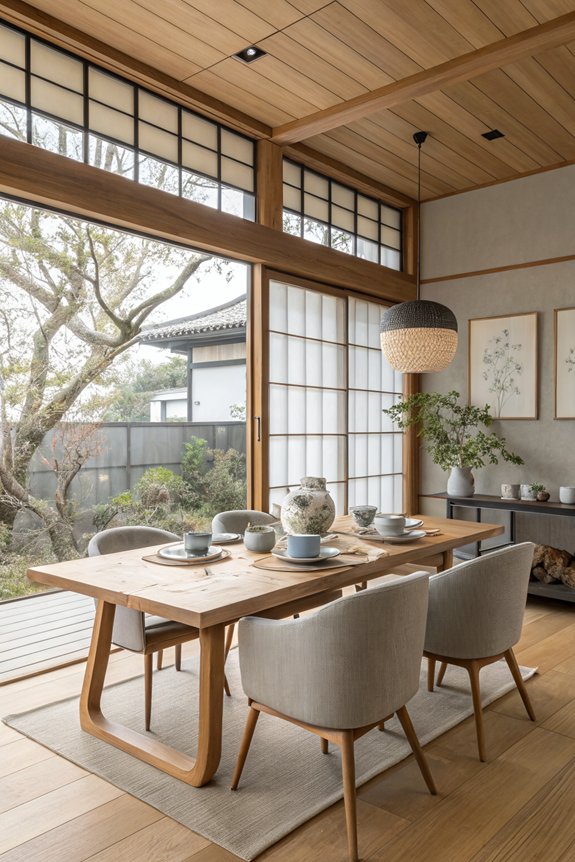
While blending Japanese and Scandinavian elements may seem challenging, achieving harmony in your dining room is entirely possible. Focus on clean lines and functional designs, combining warm wood tones with subtle textures. Incorporate minimalistic decor, like simple tableware or greenery, to enhance the aesthetic. By thoughtfully selecting each piece, you can create a serene space that reflects the best of both styles.
Minimalist Furniture: Essential Pieces for a Japandi Dining Room
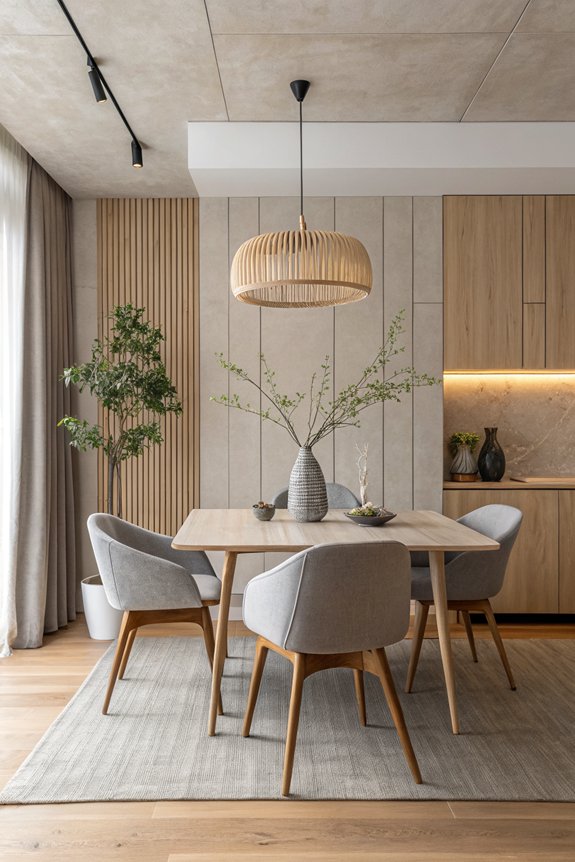
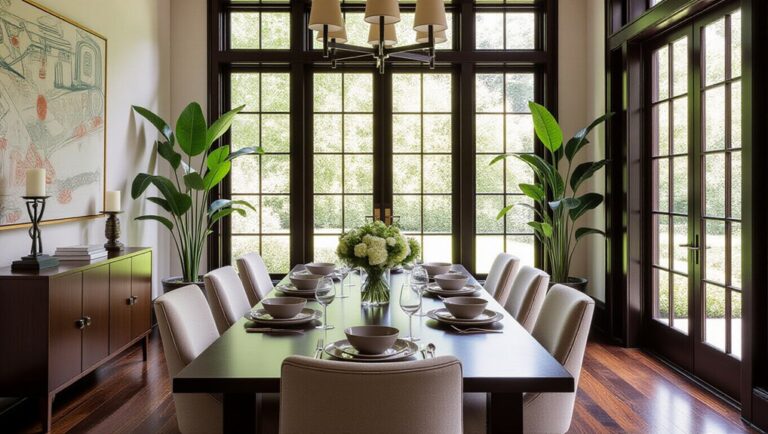
Minimalist furniture plays a crucial role in creating a Japandi dining room that feels both inviting and functional. To achieve the perfect blend of simplicity and elegance, consider incorporating these essential pieces:
- A clean-lined wooden dining table
- Sleek, upholstered dining chairs
- A minimalist sideboard for storage
- Simple decorative elements, like a vase or plant
These choices will enhance your space beautifully.
Japandi Dining Room Lighting Ideas
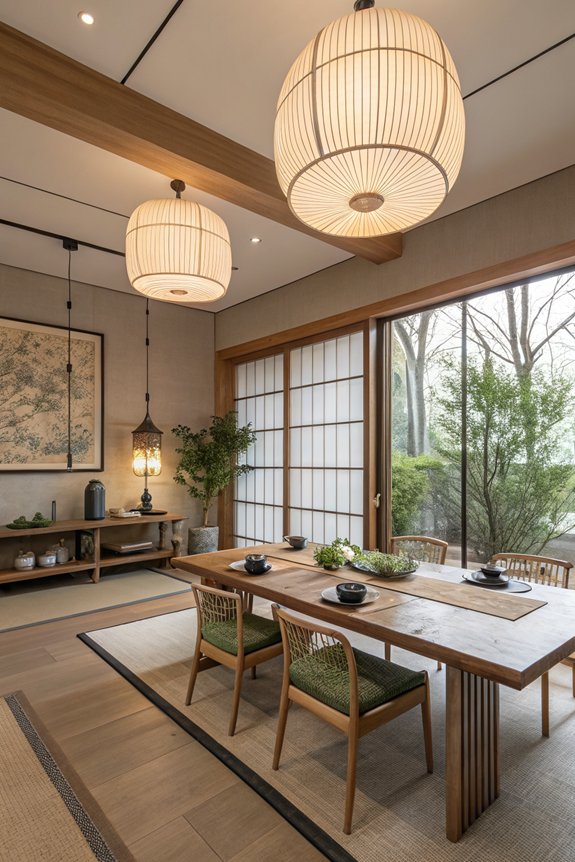
Lighting can considerably enhance the ambiance of your Japandi dining room, complementing the minimalist furniture you’ve chosen. Consider pendant lights with wooden or bamboo accents to add warmth. Soft, adjustable wall sconces can create a cozy atmosphere during evening meals. Incorporating floor lamps with simple lines also offers functional elegance, ensuring your space feels inviting without overwhelming the serene aesthetic.
Incorporating Textures: Soft Fabrics and Hard Surfaces
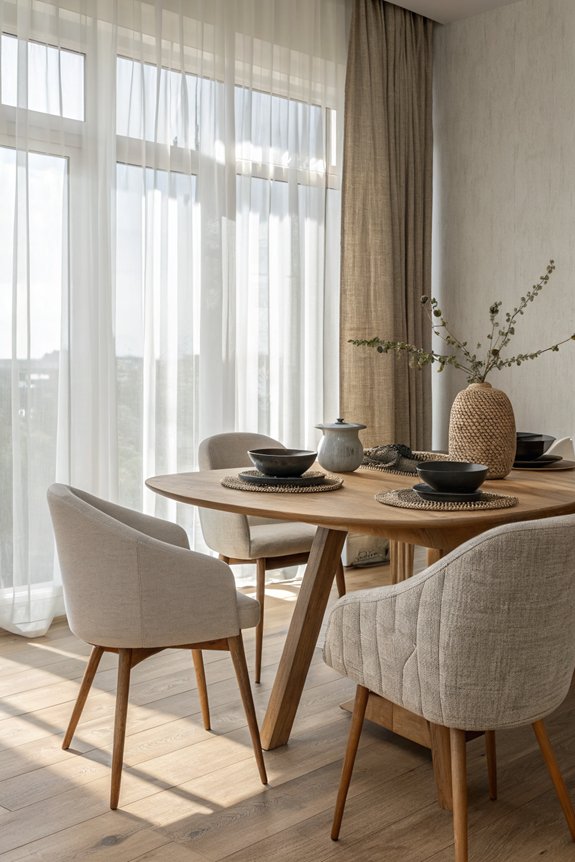
To create a balanced Japandi dining room, incorporating a mix of soft fabrics and hard surfaces is essential. This combination not only adds visual interest but also enhances comfort. Consider these elements:
- Plush linen or cotton table runners
- Textured wool or jute area rugs
- Sleek wooden or ceramic dining tables
- Smooth glass or metal accent pieces
These textures will harmonize your space beautifully.
How Functionality Shapes Japandi Dining Room Design
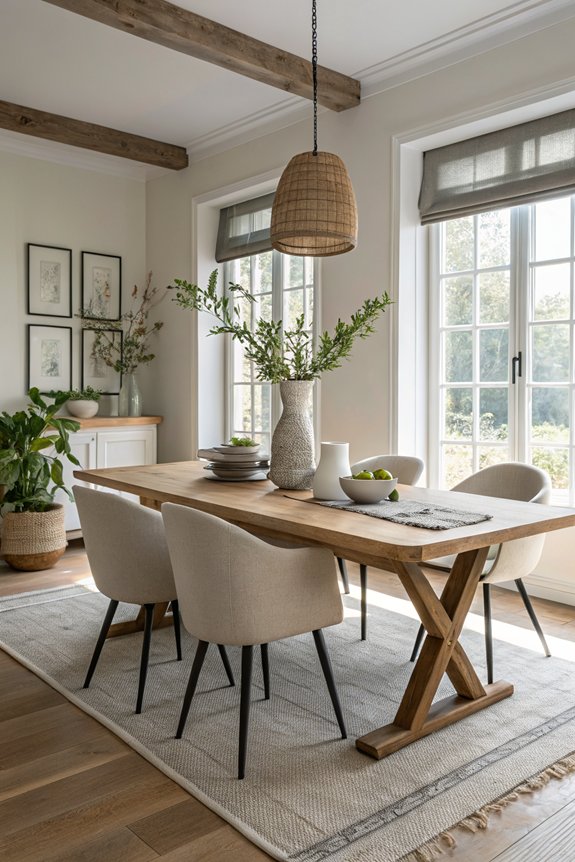
While creating a Japandi dining room, you’ll find that functionality plays an essential role in the overall design. Prioritizing practical elements guarantees your space remains clutter-free and inviting. Choose furniture that serves multiple purposes, like a sleek dining table that doubles as a workspace. This balance of form and function creates a harmonious environment, allowing you to enjoy meals and gatherings effortlessly.
Using Plants to Bring Life Into Your Japandi Dining Area
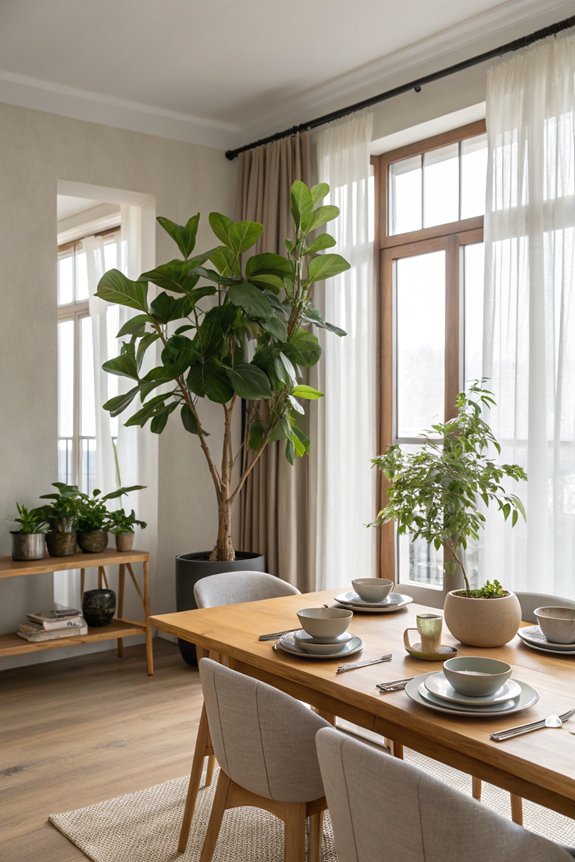
Incorporating plants into your Japandi dining area not only enhances the aesthetic but also fosters a sense of tranquility. To elevate your space, consider these plant options:
- Bamboo: Adds height and a calming vibe.
- Fiddle Leaf Fig: Offers striking leaves for visual interest.
- Succulents: Easy to maintain and perfect for tabletops.
- Snake Plant: Purifies air while providing a modern touch.
Choosing Japandi Decor for a Personal Touch
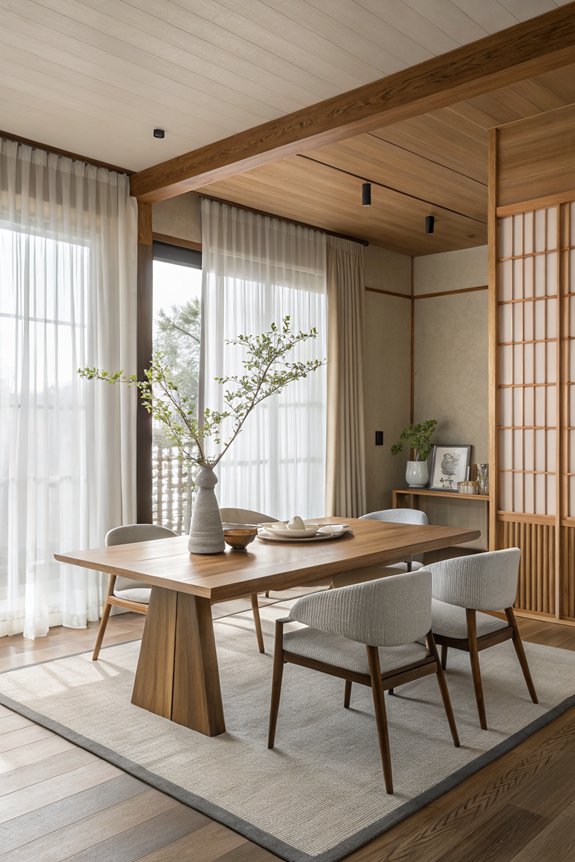
Bringing plants into your Japandi dining area sets a serene foundation, but adding personal decor takes the space to the next level. Incorporate meaningful art pieces, unique textiles, or cherished mementos that reflect your personality. Choose handcrafted items that blend seamlessly with the minimalist aesthetic. This thoughtful touch not only enhances the decor but also creates a warm, inviting atmosphere for you and your guests.
Open Concept vs. Defined Spaces: Which Works Best?
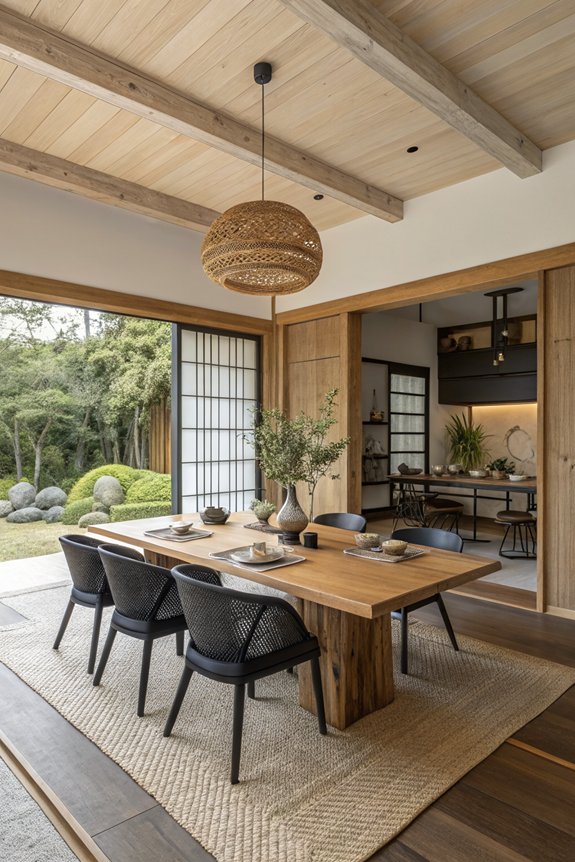
As you consider the layout of your Japandi dining room, you’ll find that both open concept and defined spaces offer distinct advantages.
- Open concept promotes fluidity and social interaction.
- Defined spaces create a sense of intimacy and focus.
- Both styles can incorporate Japandi’s minimalism.
- Your choice ultimately depends on your lifestyle and design preferences.
Which one resonates with you the most?
Achieving Symmetry and Asymmetry in Design?
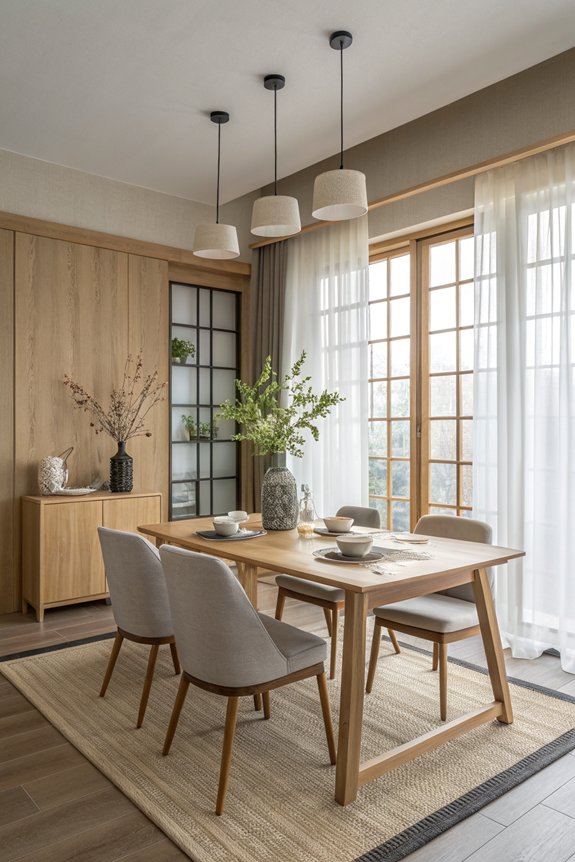
While achieving the right balance between symmetry and asymmetry in your Japandi dining room design, you can create a space that’s both harmonious and visually intriguing. Use symmetrical elements like a central dining table flanked by identical chairs, while introducing asymmetry with unique decor pieces or varying heights in plants. This blend invites interest while maintaining a peaceful, cohesive atmosphere that reflects Japandi’s essence.
Tips for Creating a Cozy Atmosphere in Your Japandi Dining Room
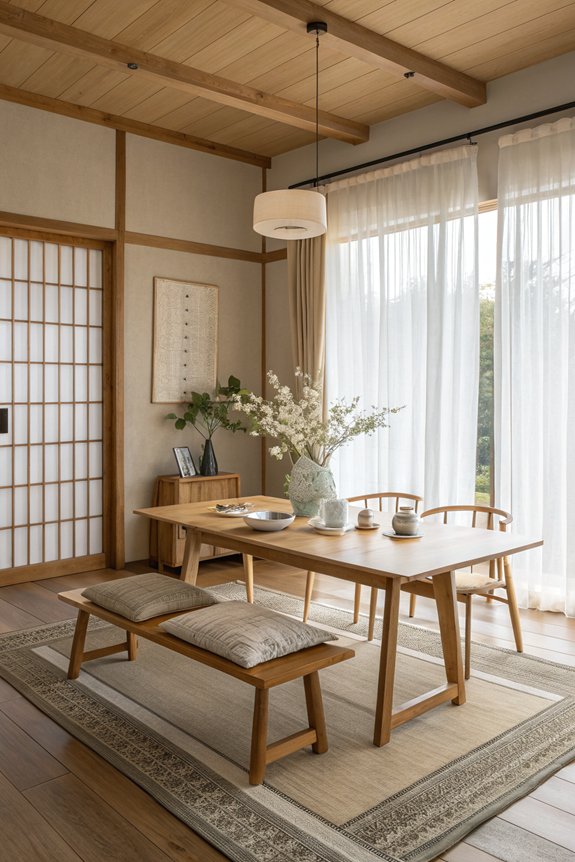
Creating a cozy atmosphere in your Japandi dining room can enhance the overall dining experience. To achieve this warmth and comfort, consider these tips:
- Use natural materials like wood and textiles.
- Incorporate soft lighting with pendant lamps or candles.
- Add plants for a touch of nature.
- Select a neutral color palette to promote serenity.
These elements will make your dining space inviting and relaxing.
Why Japanese Craftsmanship Matters in Japandi Design
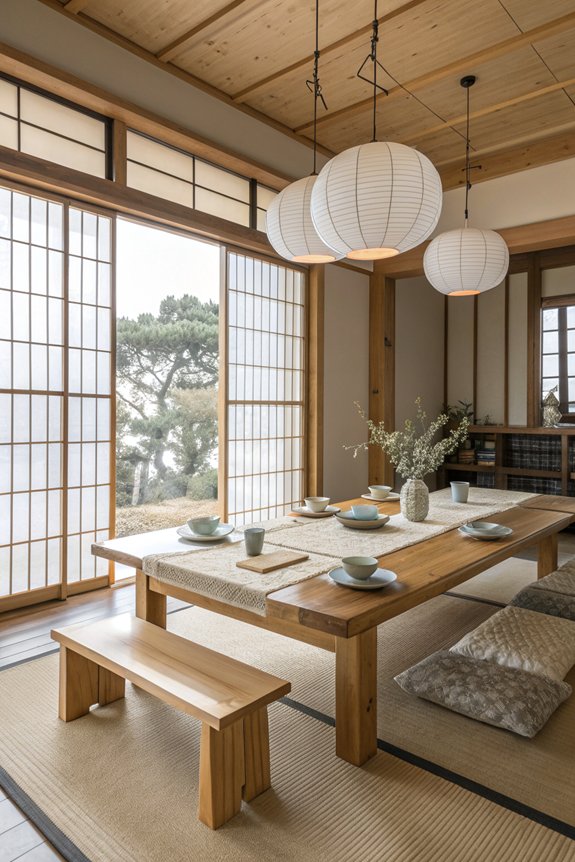
Japanese craftsmanship plays an essential role in Japandi design, enhancing the aesthetic and functional qualities of your dining space. The meticulous attention to detail, use of natural materials, and emphasis on minimalism create an environment that feels both elegant and inviting. By incorporating handcrafted pieces, you not only elevate the style but also foster a deeper appreciation for the artistry behind each item in your home.
Sustainable Practices: Enhancing Japandi Design
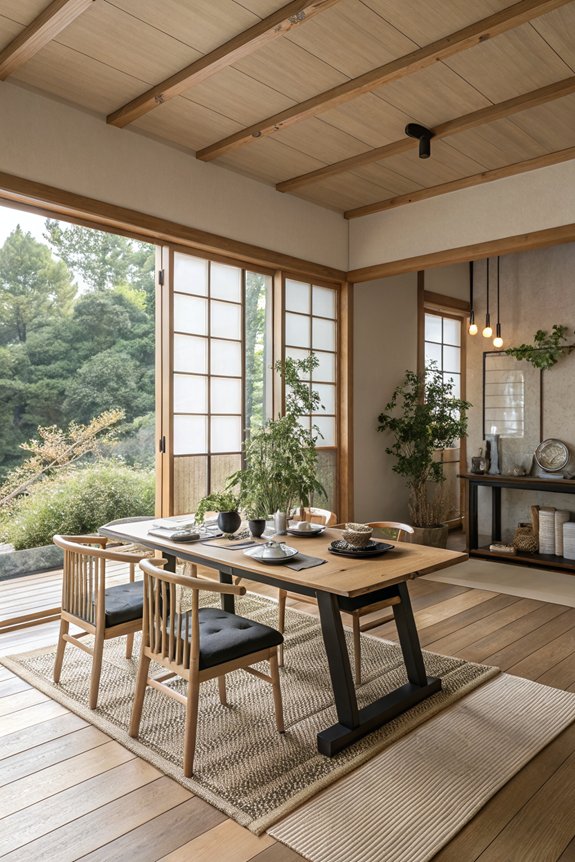
Incorporating sustainable practices into Japandi design not only aligns with its core principles but also enhances the overall aesthetic of your dining room. You can create a harmonious space by focusing on:
- Reclaimed wood furniture for a rustic touch
- Eco-friendly textiles like organic cotton or linen
- Minimalist decor to reduce waste
- Energy-efficient lighting to create a cozy atmosphere
Embrace sustainability for a refined look!
Selecting the Perfect Dining Table as a Centerpiece
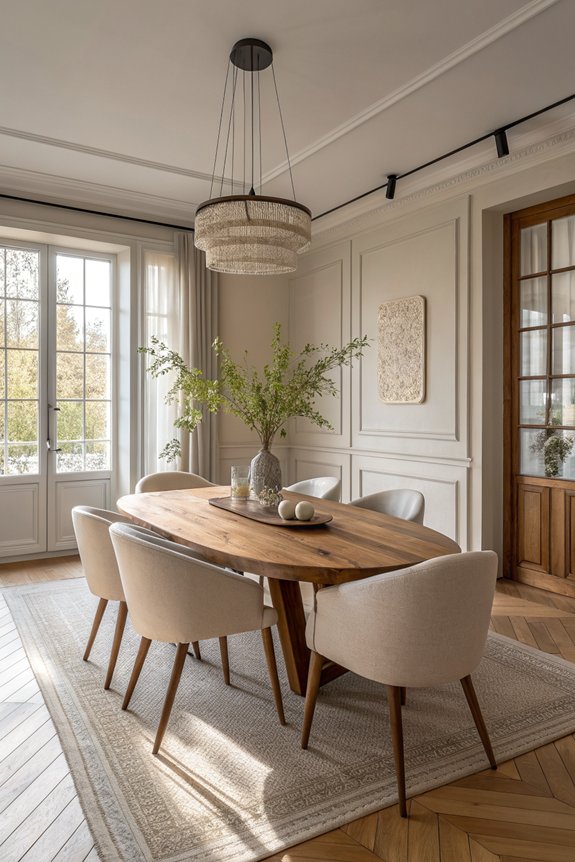
While choosing the perfect dining table as a centerpiece, you should consider both functionality and style to enhance your Japandi dining room. Look for tables that blend natural materials, like wood or bamboo, with clean lines. A minimalist design not only complements the aesthetic but also provides ample space for dining. Don’t forget to guarantee it fits your room’s size and layout seamlessly.
Comfortable and Stylish Seating Arrangements
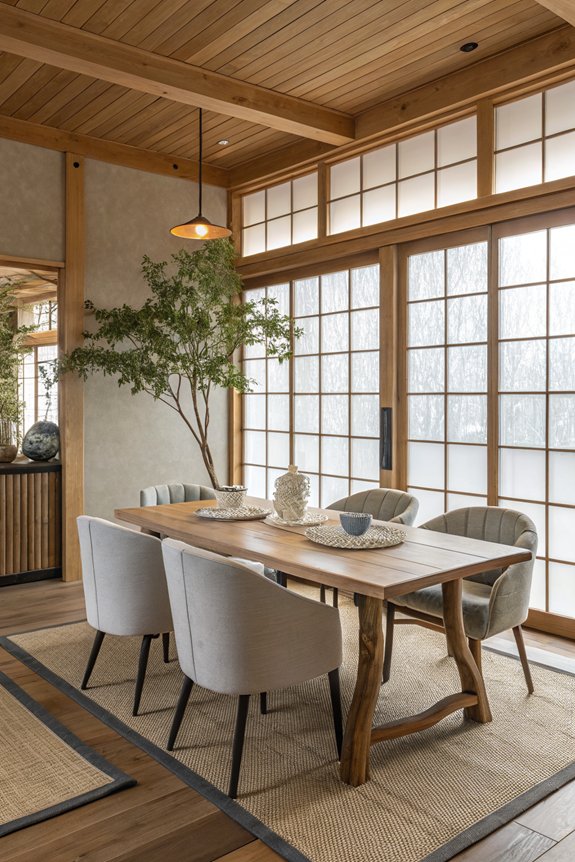
To create a comfortable and stylish seating arrangement in your Japandi dining room, focus on selecting chairs that reflect the aesthetic’s simplicity and functionality. Consider options that blend wood and fabric, ensuring they’re inviting and cozy.
- Opt for low-profile designs
- Incorporate natural materials
- Choose neutral colors
- Add cushions for extra comfort
These elements will enhance your dining experience beautifully.
Creating a Focal Point: Wall Decor and Accessories
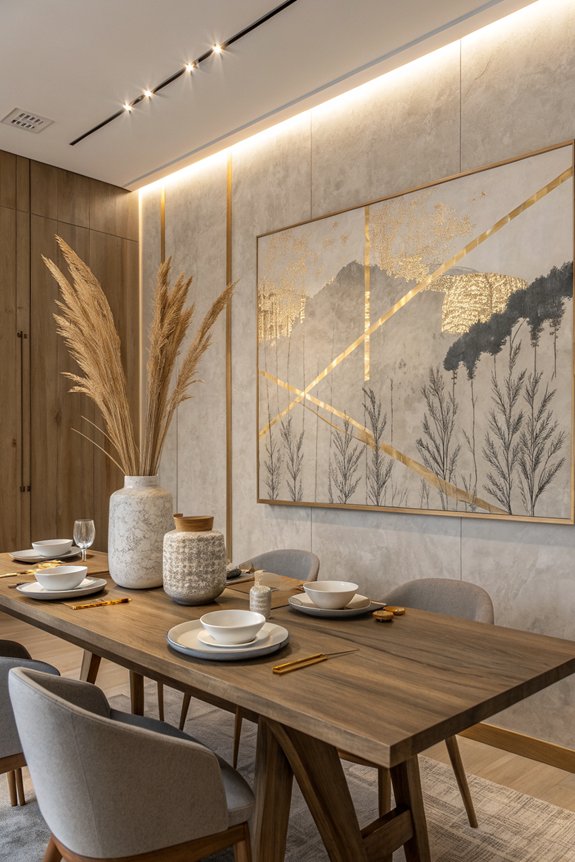
A well-chosen piece of wall decor can elevate your Japandi dining room, drawing the eye and creating a cohesive look. Consider incorporating minimalistic artwork or handcrafted ceramics that reflect natural tones. You might also add a large statement mirror, enhancing light and space. Pair these with simple accessories, like woven baskets or sleek vases, to maintain that elegant yet simple aesthetic.
Final Thoughts: Embracing the Japandi Lifestyle at Home
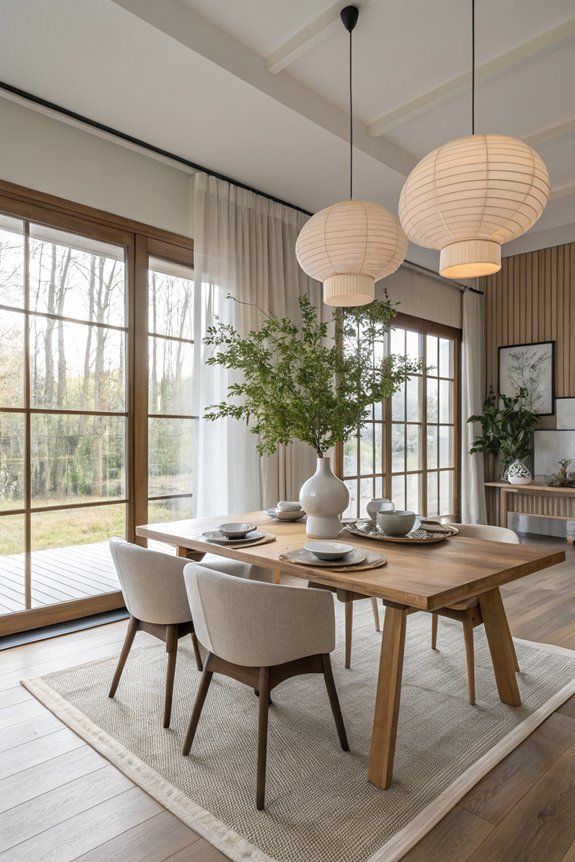
Incorporating thoughtful wall decor and accessories sets the stage for embracing the Japandi lifestyle at home. Focus on blending simplicity with elegance to create a serene environment. Consider these elements:
- Natural materials like wood and stone
- Minimalist art pieces
- Soft, neutral color palettes
- Functional yet stylish furniture
Conclusion
Embracing the Japandi lifestyle at home invites a unique blend of elegance and simplicity into your dining space. By focusing on minimalism, natural materials, and functional design, you create an atmosphere that promotes mindfulness and tranquility. As you select your colors, furniture, and decor, remember to balance the warm, inviting elements of Scandinavian design with the serene aesthetics of Japanese tradition. Your dining room can become a haven for connection and relaxation, reflecting your personal style and values.